
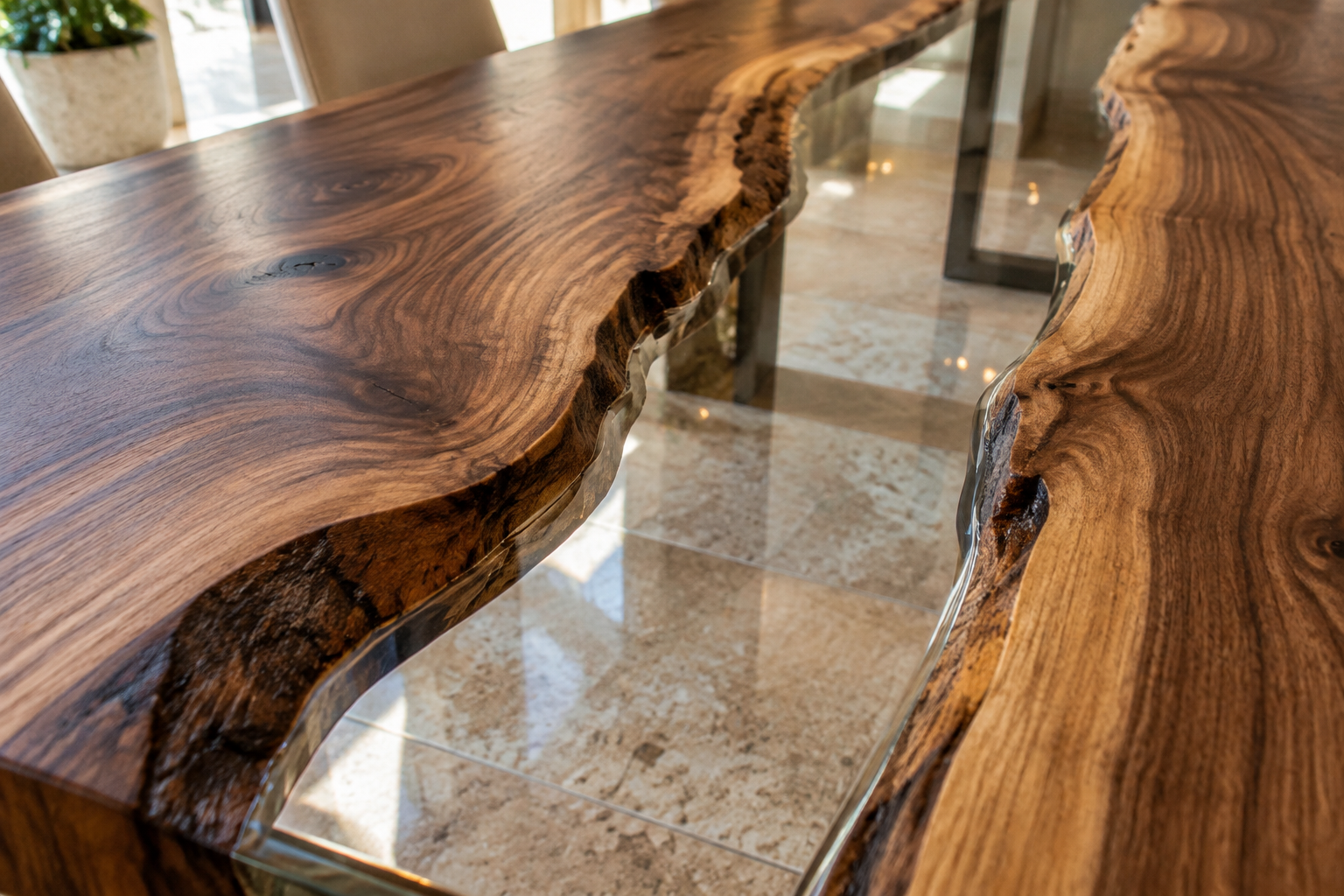
Where Two Materials Meet
The river table represents one of the most compelling innovations in contemporary furniture design. By combining two slabs of solid wood with a channel of transparent resin, it creates a visual dialogue between the organic and the crystalline — between nature and imagination.
The FLOW Process
Creating a FLOW table begins with selecting two matching slabs from the same tree. Their natural inner edges — irregular, organic, unpredictable — define the shape of the resin river that will flow between them. No two rivers are alike, because no two edges are alike.
Crystal Clarity
The resin used in FLOW tables is perfectly transparent, allowing the eye to travel through the surface to the world below. When light catches the resin, it creates subtle reflections and refractions that change throughout the day — a table that is never quite the same twice.
Engineering and Artistry
A river table demands precision. The resin must be poured at exactly the right temperature and viscosity, cured under controlled conditions, and then sanded and polished alongside the wood to create a seamless surface. It is a process that requires both technical mastery and artistic sensitivity.
A Contemporary Statement
FLOW tables are designed for spaces that embrace contemporary living — where architecture meets art, and where the dining table is not just functional furniture but a centerpiece that inspires conversation.